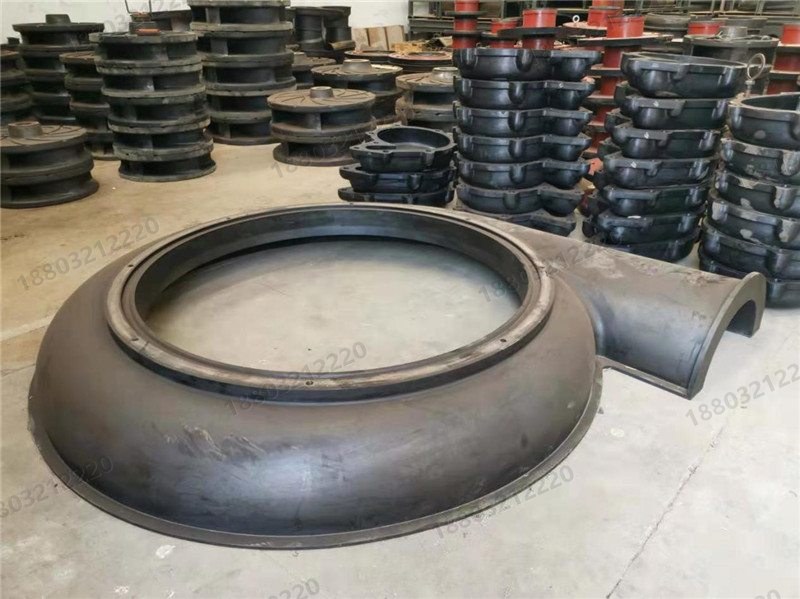
Slurry Pump Liner SupplierFront liners, frame plate liners and volute liners by basic part number
Slurry pump liners: front liner (throatbush), frame plate liner and volute liner, supplied by basic part number (041, 083, 110) in high-chrome alloy or rubber.
Liner price differences come mostly from material and wall thickness; performance differences after replacement come mostly from clearance setting. Both have to be right before a liner change is worth doing.
Front liner, frame plate liner and volute liner form the pump chamber.
Part
Position and function
Wear symptom
Front liner
Between cover plate and impeller eye; forms the inlet sealing face
Ring grooves in the bore, falling flow and NPSH
Frame plate liner
Behind the impeller on the drive side; forms the sealing chamber
Internal recirculation, falling efficiency
Volute liner
Lines the casing to form the volute passage
Cutwater and discharge grooving, falling head, vibration
Cover plate liner
Completes the chamber and matches the volute liner
Joint leakage and local erosion
CLEARANCE
Clearance, not wall thickness, decides performance
The narrow gap between impeller and liners limits internal recirculation. As it opens, part of the slurry circulates inside the pump instead of leaving through the discharge: flow and head fall, power consumption rises, and the pump still sounds normal.
Replacing liners therefore means measuring and setting the clearance to the manual value, confirming gasket thickness, cleaning the joint faces and re-checking after the first run.
Measure before assembly Record the old clearance and wear pattern as the baseline for setting the new parts.
Do not add gaskets casually Gasket thickness changes the clearance directly.
Clean joint faces Trapped particles tilt the assembly and cause one-sided wear.
MATERIAL
Metal or rubber
Material
Use
Avoid
High-chrome alloy
Coarse, abrasive, higher temperature
Strong corrosion without a corrosion-resistant grade
Yes, but check the other liners at the same time. If they are grooved, recirculation stays high and performance recovery is limited.
Does a worn-through liner damage the casing?
Yes. Once the liner is through, slurry erodes the casing bore and can require a casing replacement, so liners should be changed on thickness readings.
How do I decide when a liner is worn out?
Three checks: grooving on the sealing face, wall thickness against the wear limit, and measurable loss of flow or head. Time in service alone is unreliable.
Is rubber suitable for liner sets?
For fine particles, mild chemicals and moderate temperature. Sharp coarse solids cut the rubber and higher temperature ages it.
Next step
Send the duty or the part number
For a pump, send medium, flow, head, concentration and site conditions. For parts, send the pump model, frame code and basic part number, or a photo of the worn part. We normally confirm the item and price within one business day.