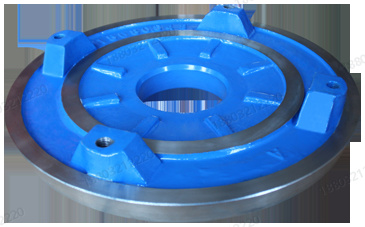
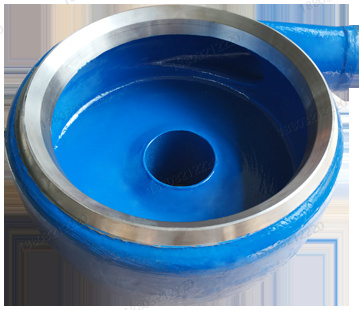
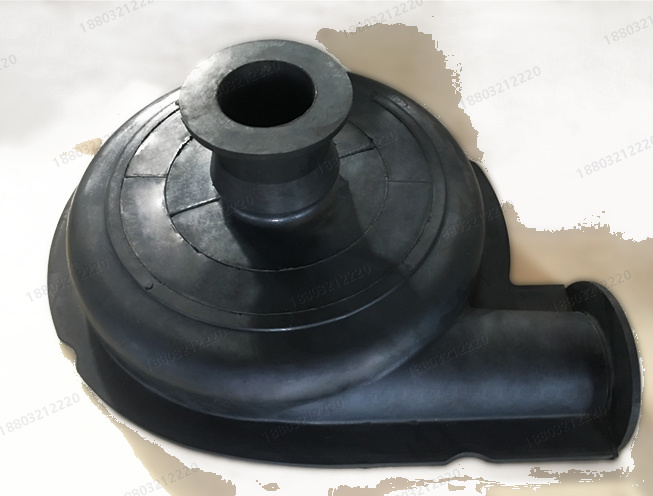
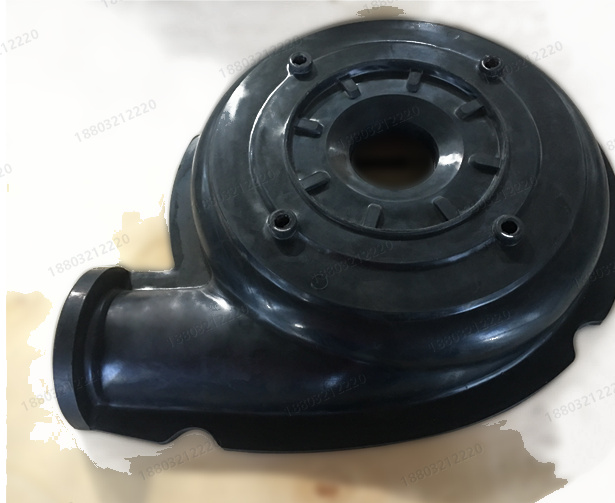
The double-casing design separates pressure containment from wear: the outer casing carries pressure and connects the pipework, while the volute liner, front liner and frame plate liner form the flow path. When they wear, only the lining is replaced.
Each liner has its own job. The front liner controls inlet recirculation, the frame plate liner forms the sealing chamber on the drive side, and the volute liner converts velocity into pressure. Wear in any of them shows first as lost flow and head.
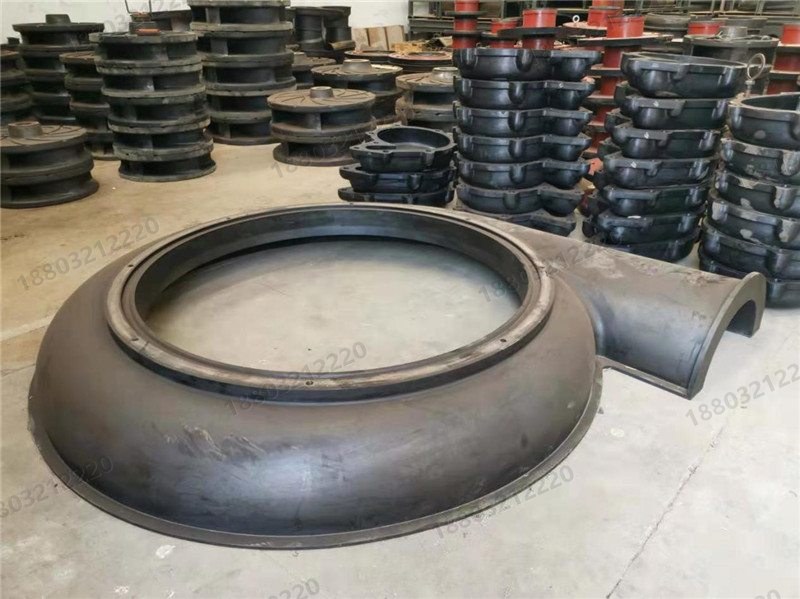
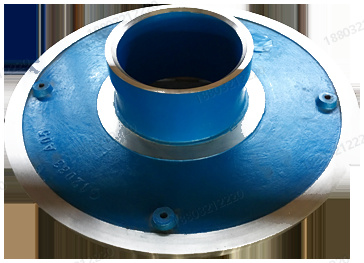
| Part / structure | Description |
|---|---|
| Front liner | Between cover plate and impeller eye, forms the inlet sealing face |
| Frame plate liner | Behind the impeller on the drive side, forms the sealing chamber |
| Volute liner | Lines the casing to form the volute passage |
| Cover plate liner | Completes the pump chamber and matches the volute liner |
| Part | Function in the pump | Typical material |
|---|---|---|
| Front Liner | The front liner (throatbush) protects the suction-side cover, forms the impeller inlet sealing face and controls inlet recirculation and suction-side wear. | High-chrome wear alloy or rubber; metal parts are preferred for fine but highly abrasive solids. |
| Frame Plate Liner | The frame plate liner protects the drive-side casing from erosion and forms the sealing chamber with the impeller rear shroud, directly affecting volumetric efficiency. | High-chrome wear alloy, rubber lining or wear/corrosion-resistant alloy, matched to the impeller material. |
| Volute Liner | The volute liner collects slurry discharged by the impeller and converts velocity energy into pressure. It is the key replaceable wear liner in a double-casing pump. | High-chrome wear alloy, wear-resistant rubber or polyurethane: metal for coarse abrasive solids, rubber for corrosive fine particles. |
| Front Sheath | The front sheath protects the suction-side flow area and works with the impeller eye and front liner to reduce local erosion. | High-chrome wear alloy or wear-resistant rubber according to abrasion severity. |
| Rear Sheath | The rear sheath protects the transition between the drive-side chamber and the seal area, reducing vortex erosion and leakage risk. | Wear-resistant alloy or rubber lining, consistent with adjacent liners. |
Common combinations; grade choice needs medium temperature, concentration and particle size.
| Duty condition | Recommendation |
|---|---|
| Coarse, highly abrasive | High-chrome liners with generous wall thickness |
| Fine, corrosive | Rubber or polyurethane lining, lighter and resistant to corrosion |
| Short maintenance windows | Split or lightweight liners to cut downtime |
| High flow, high concentration | Wider passages and lower velocity at the cutwater |
Model pages list construction, code explanation and chart extracts.
Each part has its own page with basic number, material and matching range.

High-chrome wear alloy or rubber; metal parts are preferred fo…

High-chrome wear alloy, rubber lining or wear/corrosion-resist…

High-chrome wear alloy, wear-resistant rubber or polyurethane:…

High-chrome wear alloy or wear-resistant rubber according to a…

Wear-resistant alloy or rubber lining, consistent with adjacen…
Judge by wall thickness, clearance and performance, not by months in service.
Liners are the replaceable wear parts inside the pump; the casing is the pressure-retaining shell. In a double-casing pump the slurry touches the liners, not the casing.
Yes, but the clearance must be re-set. If the other liners are grooved, performance will not return to the original level.
No. Sharp coarse particles cut and tear the rubber, so high-chrome liners are used.
Parts are supplied by basic part number because the same name has different numbers in different frames. Send the pump model, frame code and a photo of the worn part, or the basic number directly.
We reply within one business day. You can also call +86 188 0321 2220.
Please provide the pump model, nameplate data and duty parameters by phone or email. Performance charts and manuals can be read online.