Shijiazhuang Zhongqian Pump Industry Co., Ltd. · Slurry pumps / Spare parts / Technical support
ZQZhongqian PumpZHONGQIAN PUMP
Home/Products/Rubber Slurry Pump Parts
PRODUCTS · RUBBER SLURRY PUMP PARTS

Rubber Slurry Pump PartsRubber impellers, liners and cover plate liners for fine-particle and corrosive duty

Rubber wetted parts are often treated as a cheap substitute. In the right duty they outlast metal several times over, weigh less, fit faster and run quieter. The key is to use them where they belong: fine particles, mild acids and alkalis, moderate temperature.

A practical threshold is particle size. Within roughly 10 mm, with rounded particles and pH from mildly acidic to alkaline, rubber is usually the lower cost per hour. Above that, or at elevated temperature, high-chrome alloy is the correct route.
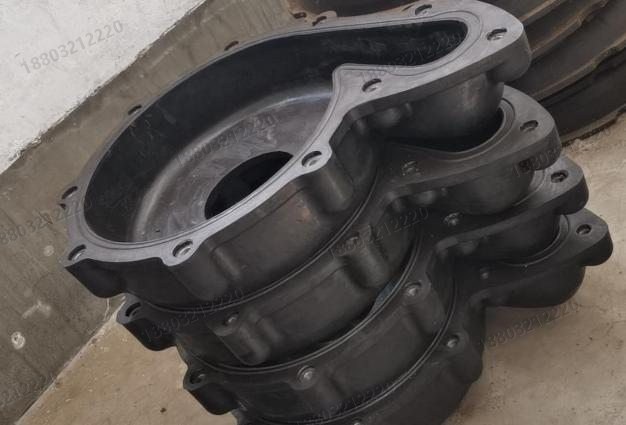
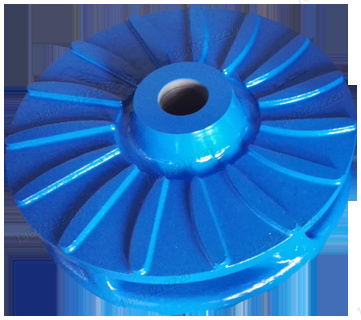
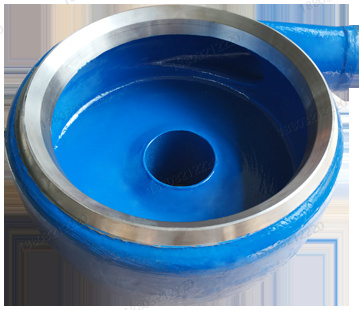
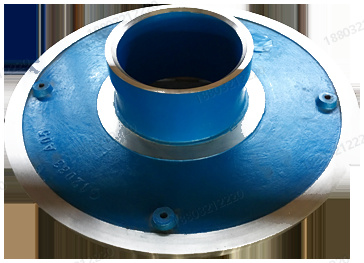
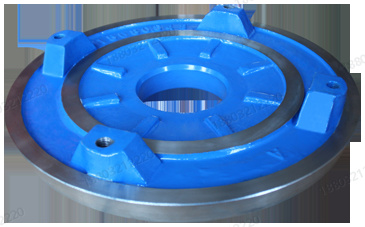
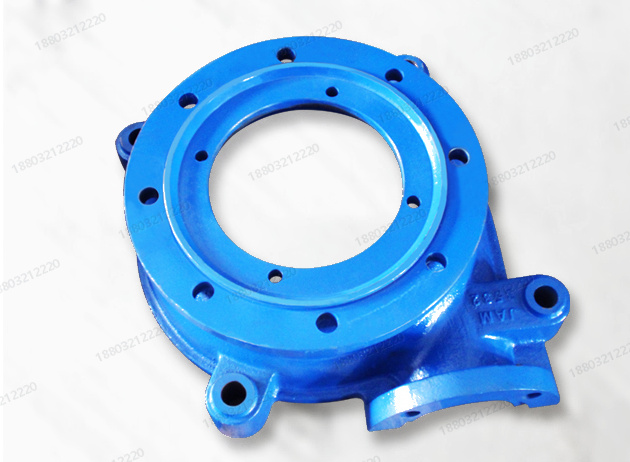
Rubber lined slurry pump parts
Rubber Slurry Pump Parts
SCOPE

What this category covers

Part / structureDescription
Rubber impellerRubber moulded over a steel core for fine, mildly corrosive slurry
Rubber volute linerForms the flow passage; about half the weight of a metal liner
Rubber cover plate linerFront and frame plate liners matched to the rubber volute
Rubber-lined casingCasing with an integrally bonded rubber lining
MATERIALS

Typical materials for each part

PartFunction in the pumpTypical material
ImpellerThe impeller is the energy-converting core of a slurry pump. It transfers motor torque to the slurry and determines flow, head and efficiency; vanes are thick and passages wide so solids can pass.Mainly high-chrome wear alloy (A05 / Cr26 / Cr27); rubber or polyurethane for fine, mildly corrosive or rounded particles, and duplex stainless steels for severe corrosion.
Volute LinerThe volute liner collects slurry discharged by the impeller and converts velocity energy into pressure. It is the key replaceable wear liner in a double-casing pump.High-chrome wear alloy, wear-resistant rubber or polyurethane: metal for coarse abrasive solids, rubber for corrosive fine particles.
Front LinerThe front liner (throatbush) protects the suction-side cover, forms the impeller inlet sealing face and controls inlet recirculation and suction-side wear.High-chrome wear alloy or rubber; metal parts are preferred for fine but highly abrasive solids.
Frame Plate LinerThe frame plate liner protects the drive-side casing from erosion and forms the sealing chamber with the impeller rear shroud, directly affecting volumetric efficiency.High-chrome wear alloy, rubber lining or wear/corrosion-resistant alloy, matched to the impeller material.
Pump CasingThe casing carries system pressure and locates the pump end and frame. In a double-casing pump it is the outer pressure shell; in a single-casing gravel pump it also serves as the wear body.Ductile iron, cast steel or wear-resistant alloy; in double-casing pumps the inner surface is protected by replaceable liners.
SELECTION

Matching structure and material to the duty

Common combinations; grade choice needs medium temperature, concentration and particle size.

Duty conditionRecommendation
Fine (<10 mm), roundedRubber impeller, volute liner and liners as a set
pH 2–12, mild chemicalsRubber outperforms standard metal; confirm the compound
Sharp coarse solids or >70°CUse high-chrome alloy; rubber will tear or age
Low noise, frequent handlingRubber parts are lighter and faster to change
MATCHING RANGE

Matching series and models

Model pages list construction, code explanation and chart extracts.

AH series
ZJ series
ZGB series
SP series
HH series
G series
DT series
RELATED PARTS

Parts in this category

Each part has its own page with basic number, material and matching range.

FAILURE MODES

How these parts fail and what to do

Judge by wall thickness, clearance and performance, not by months in service.

FAQ

Rubber Slurry Pump Parts questions

Are rubber parts cheaper than metal parts?

The unit price is usually lower and the weight is less, but the real comparison is cost per operating hour. In fine corrosive duty rubber often lasts longer.

Can a rubber impeller be used at high head?

It can, provided tip speed and temperature rise are within the compound limits, which must be confirmed for the application.

How do I know a rubber part is worn out?

Check lining thickness, cuts, blisters and sealing face distortion. Replace when less than half the original thickness remains or a through cut appears.

Inquiry

Send a model or worn-part dimensions

Parts are supplied by basic part number because the same name has different numbers in different frames. Send the pump model, frame code and a photo of the worn part, or the basic number directly.

Ask about Rubber Slurry Pump Parts

We reply within one business day. You can also call +86 188 0321 2220.

Your details are used for this inquiry only.

Model and spare part identification

Please provide the pump model, nameplate data and duty parameters by phone or email. Performance charts and manuals can be read online.

Click outside or press Esc to close
☎Call✉Email⇄Inquiry