The shaft seal is where slurry pumps differ most in daily operation. Packing is simple and inexpensive but needs flush water and accepts slight drip. A mechanical seal runs almost leak-free but demands cleaner medium, a flush plan and careful fitting.
Start with the medium. Where solids are present, a mechanical seal needs reliable clean flush water; without it the faces are destroyed quickly. Where flush water is not available, an expeller with packing is often the more dependable arrangement.
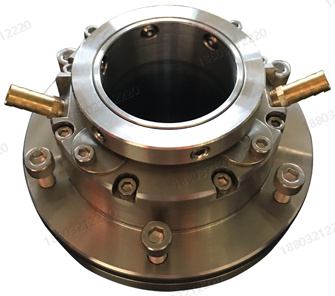
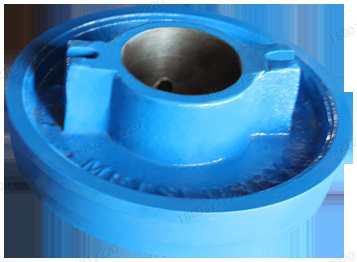
| Part / structure | Description |
|---|---|
| Packing | Stuffing box, packing rings, lantern ring and gland; needs flush water |
| Mechanical seal | Rotary and stationary faces with springs; low leakage, sensitive to solids |
| Expeller seal | Back vanes generate pressure to oppose leakage, usually with packing |
| Seal accessories | Lantern ring, O-rings, gaskets and flush piping decide seal life |
| Part | Function in the pump | Typical material |
|---|---|---|
| Stuffing Box | The stuffing box houses packing, the lantern ring and the gland, forming the packing seal chamber and admitting seal water for cooling, lubrication and flushing. | Cast iron, cast steel or wear/corrosion-resistant alloy, with the bore matched to the shaft sleeve. |
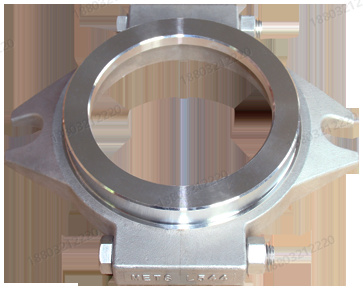
| Gland | The gland compresses the packing to maintain moderate contact with the shaft sleeve and control leakage. A split design allows packing replacement without dismantling other parts. | Cast iron, cast steel or stainless steel, usually of split construction. |
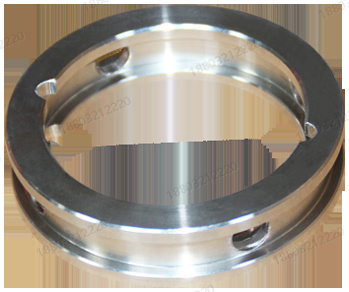
| Water Seal Ring | The lantern ring sits between packing rings and distributes seal water evenly around the sleeve, forming a water film that removes heat and particles. | Bronze, stainless steel or wear-resistant alloy with distribution holes. |
| Mechanical Seal | A mechanical seal uses mating rotary and stationary faces for low leakage, suiting duties where slurry dilution is not allowed or leakage is restricted. It depends on clean flush/cooling water. | Faces are commonly silicon carbide or tungsten carbide; metal parts and secondary seals follow pH and temperature. |
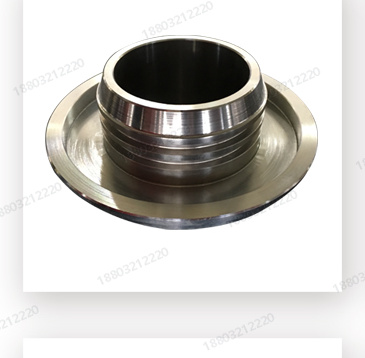
| Labyrinth Sleeve | The labyrinth sleeve uses a series of tortuous clearances to keep slurry out of the bearing chamber and lubricant in. | Cast iron, steel or wear-resistant alloy, often combined with a water thrower. |
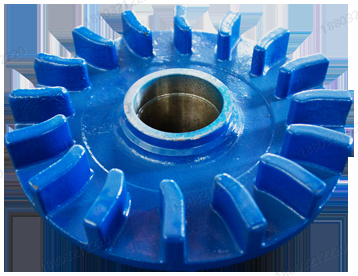
| Expeller | The expeller generates a reverse centrifugal pressure that holds slurry back, forming a dynamic seal. At standstill or low pressure it is commonly combined with packing. | High-chrome wear alloy or wear-resistant rubber, matched to the wetted parts. |
Common combinations; grade choice needs medium temperature, concentration and particle size.
| Duty condition | Recommendation |
|---|---|
| Clean flush water available | Mechanical seal with a controlled flush plan |
| No flush water, solids present | Expeller plus packing, accepting slight drip |
| High suction pressure | Expeller or mechanical seal to avoid pushing packing out |
| Corrosive medium | Select face materials and O-ring compound for the medium |
Model pages list construction, code explanation and chart extracts.
Each part has its own page with basic number, material and matching range.

Cast iron, cast steel or wear/corrosion-resistant alloy, with …

Cast iron, cast steel or stainless steel, usually of split con…

Bronze, stainless steel or wear-resistant alloy with distribut…

Faces are commonly silicon carbide or tungsten carbide; metal …

Cast iron, steel or wear-resistant alloy, often combined with …

High-chrome wear alloy or wear-resistant rubber, matched to th…
Judge by wall thickness, clearance and performance, not by months in service.
No. Mechanical seals leak less and need less attention, but depend on flush water and cleanliness. With coarse solids and no flush water, packing with an expeller is safer.
A slight continuous drip is normal for lubrication and cooling; the manual gives the value. A sudden increase, or no drip at all, needs adjustment.
Yes if the sleeve is grooved, otherwise the new seal will be worn by the grooves.
Parts are supplied by basic part number because the same name has different numbers in different frames. Send the pump model, frame code and a photo of the worn part, or the basic number directly.
We reply within one business day. You can also call +86 188 0321 2220.
Please provide the pump model, nameplate data and duty parameters by phone or email. Performance charts and manuals can be read online.